
GROUNDING: What the evidence tells us about reconnecting the body to the earth
GROUNDING
What the evidence tells us about reconnecting the body to the earth
The 3R Method™ Residency, Efford Park Manor
An Old Instinct, A New Evidence Base
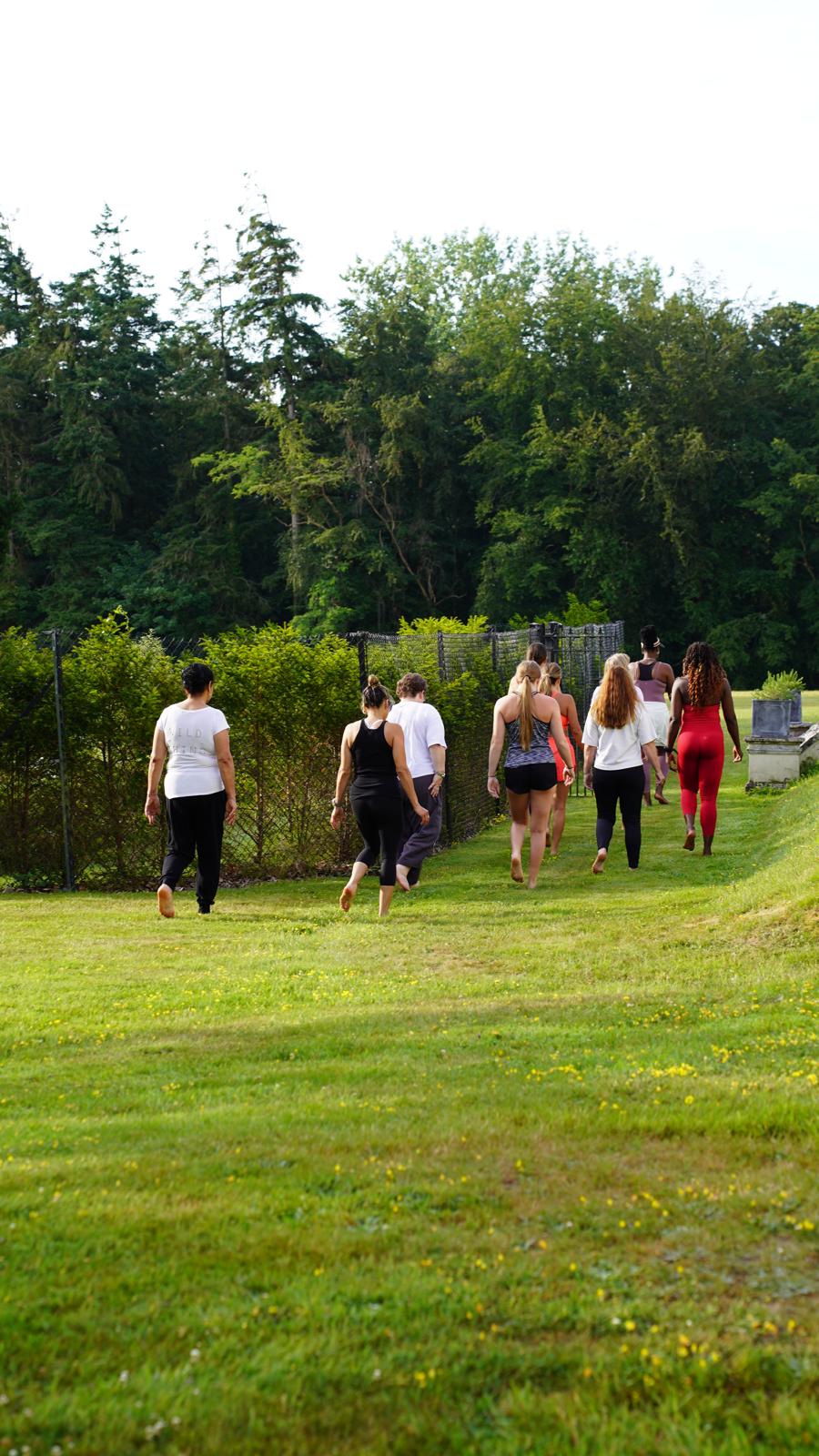
There is a moment on every retreat morning walk when the group instinctively slows down, shoes come off and bare feet meet grass. It looks like simple pleasure. It is also, increasingly, a subject of serious physiological research. Grounding, sometimes called earthing, is the practice of placing the body in direct contact with the earth's surface, whether through bare skin on soil, sand or grass, or via conductive systems that simulate that contact indoors.
For a population of midlife women navigating hormonal transition, where cortisol regulation, sleep architecture and systemic inflammation are already under strain, grounding deserves a clinician's attention rather than a wellness footnote.
What Grounding Actually Is
The underlying premise is straightforward. The earth's surface carries a mild negative electrical potential, sustained by the planet's own electromagnetic activity. Human skin is conductive. When bare skin contacts the ground, free electrons are thought to transfer into the body, a process researchers have proposed may act as a natural antioxidant, neutralising reactive oxygen species that drive oxidative stress and chronic low-grade inflammation.
This is a physiological hypothesis with a growing, if still modest, body of clinical study behind it, spanning sleep medicine, cardiovascular physiology and inflammation research.
What the Research Shows
Cortisol and Sleep The strongest current evidence comes from a sham-controlled, double-blind randomised trial that assigned sixty participants to a genuine or an identical placebo earthing mat over a thirty-one-day period. The grounded group showed significant improvements in validated sleep and stress measures, corroborated by objective actigraphy rather than self-report alone, with benefits still evident at follow-up a week after the intervention ended.
This trial design represents the current gold standard for evaluating grounding's effect on sleep and stress physiology, and builds on an earlier, smaller pilot study that first proposed the hypothesis linking overnight grounding to a healthier night-time cortisol pattern. That early pilot work has since been superseded by the more rigorous, sham-controlled trial above.
For women in perimenopause and menopause, where disrupted cortisol rhythm compounds night waking, hot flushes and daytime fatigue, this circadian realignment is clinically relevant territory, not a wellness aside.
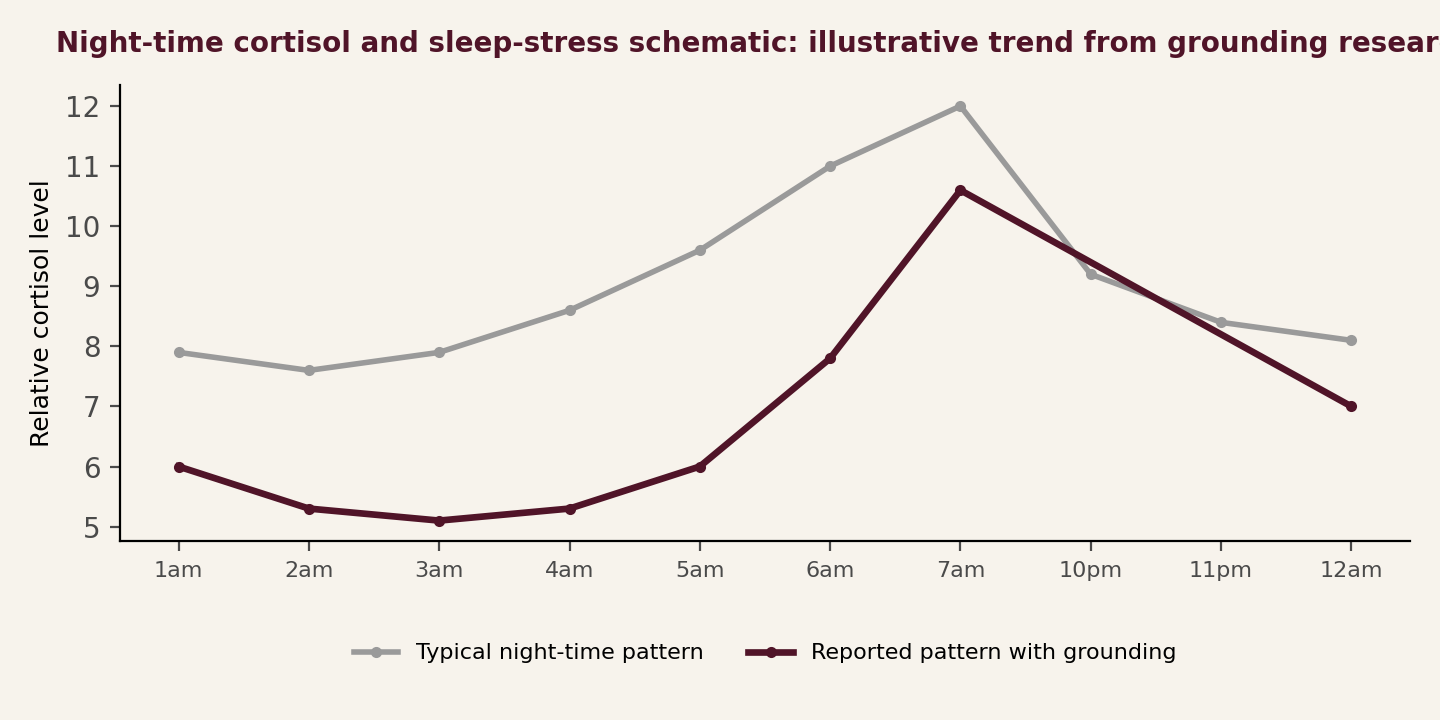 Schematic illustration of the reported sleep and stress improvements with grounding, based on the randomised, placebo-controlled trial by Park et al. (2025), the current gold-standard evidence in this field. Not raw study data.
Inflammation and Immune Response A substantial peer-reviewed review examined grounding's effects on inflammatory markers, immune response and wound healing, proposing that direct earth contact allows electrons to neutralise reactive oxygen species at sites of tissue injury before an excessive inflammatory cascade can build. The same research group has since described grounding as a potential broad-spectrum anti-inflammatory strategy relevant to chronic inflammatory and autoimmune conditions, several of which rise in prevalence during and after the menopause transition.
Cardiovascular and Autonomic Effects Smaller physiological studies have measured improvements in heart rate variability, a marker of autonomic nervous system balance and cardiovascular resilience, after periods of grounding, with greater benefit reported the longer the exposure. Blood viscosity and circulatory measures have also shown favourable shifts in preliminary work, an area of particular relevance given the cardiovascular risk that accelerates after menopause.
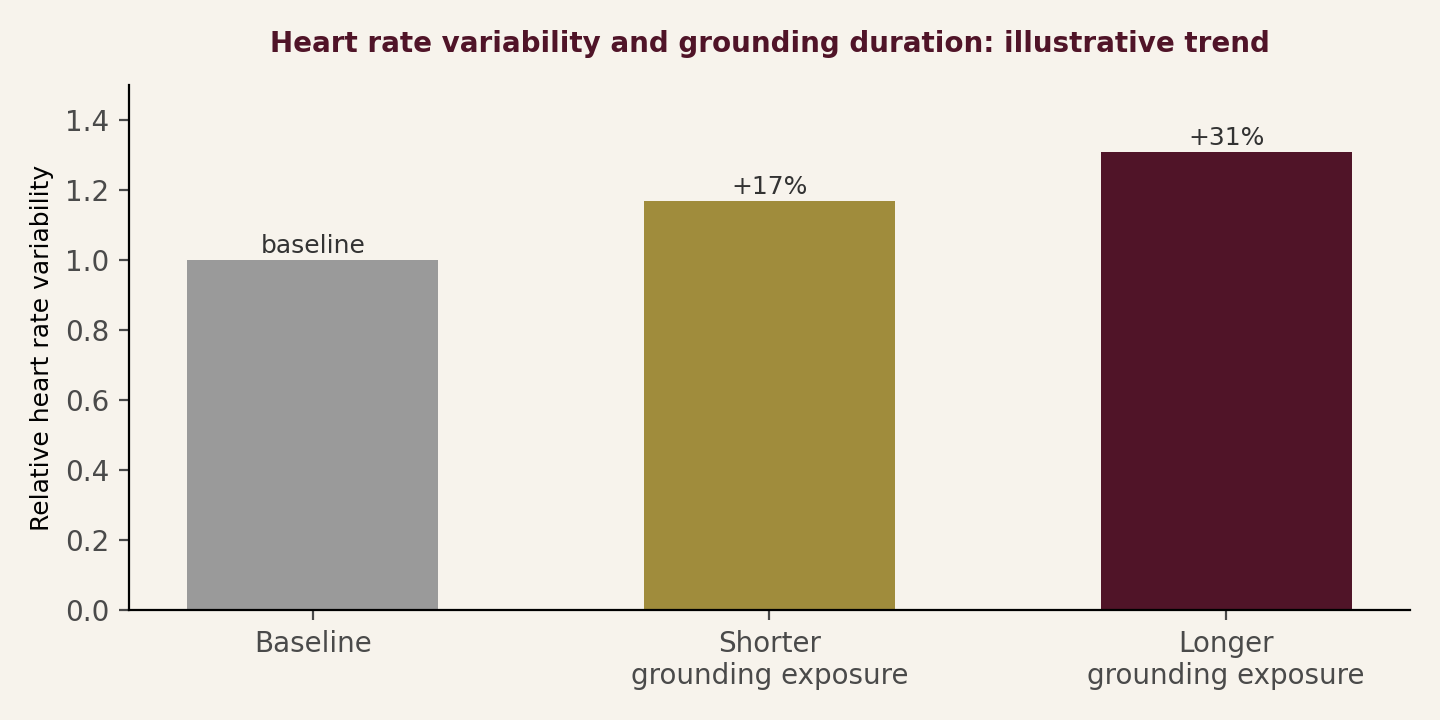 Schematic illustration of the reported heart rate variability trend, adapted from Chevalier (2010) pilot research. Not raw study data.
Randomised Controlled Evidence
The strongest study design in this field to date is a double-blind, randomised controlled trial of sixteen massage therapists, who were grounded for four weeks while working and sleeping. The trial found consistent improvements in pain, physical function and mood while grounded, using a stepped wedge design that allowed each participant to act as their own control. A separate double-blind RCT of eccentric exercise recovery also found lower post-exercise soreness in the grounded group compared with a sham-grounded placebo group. A more recent sham-controlled RCT using earthing mats over thirty-one days found similar gains in sleep and stress outcomes, verified with objective sleep tracking. These are the trial designs that carry the most clinical weight, and all point in the same direction as the earlier cohort and mechanistic work.
Neurological and Cognitive Interest
More recent review work has begun to explore grounding's relevance to neurodegenerative and cognitive health, proposing that its antioxidative and anti-inflammatory actions, alongside apparent effects on brain alpha wave activity and sleep quality, may be protective mechanisms worth further controlled study, including in Alzheimer's disease research.
The evidence base is still emerging and most study sizes remain small, but the physiological direction of travel, lower night-time cortisol, reduced inflammatory markers and improved heart rate variability, is now supported by both early cohort work and a small number of sham-controlled randomised trials.
An Honest Read of the Evidence
Clinical rigour requires proportionate interpretation. A small number of randomised controlled trials, including a thirty-one-day sham-controlled earthing mat trial, now exist alongside the earlier cohort and mechanistic work, and their direction of effect is consistent. However, sample sizes remain modest (typically under one hundred participants), a concentrated group of researchers has produced much of the foundational literature, and independent replication by unaffiliated research groups is still limited, all of which warrant appropriate caution. What the current evidence supports is a plausible physiological mechanism with a consistent, low-risk signal across multiple study designs, not a proven treatment for any specific condition.
That distinction matters. Grounding is best positioned as a low-cost, low-risk adjunct within a broader precision approach to nervous system regulation, sleep and inflammatory load, sitting alongside, never in place of, individualised hormonal and metabolic assessment.
Why It Belongs in the 3R Method™
Within the Reset phase of the 3R Method™, nervous system regulation is foundational before any hormonal or metabolic intervention can be expected to hold. Grounding offers a simple, accessible entry point:
- A plausible mechanism for lowering night-time cortisol and supporting circadian realignment, both frequently disrupted in perimenopause and menopause
- A biologically coherent, low-risk complement to anti-inflammatory nutrition and progressive loading work
- A practical, teachable habit that requires no equipment, cost or prescription
- A moment of nervous system down-regulation that supports, rather than competes with, structured movement and clinical protocol
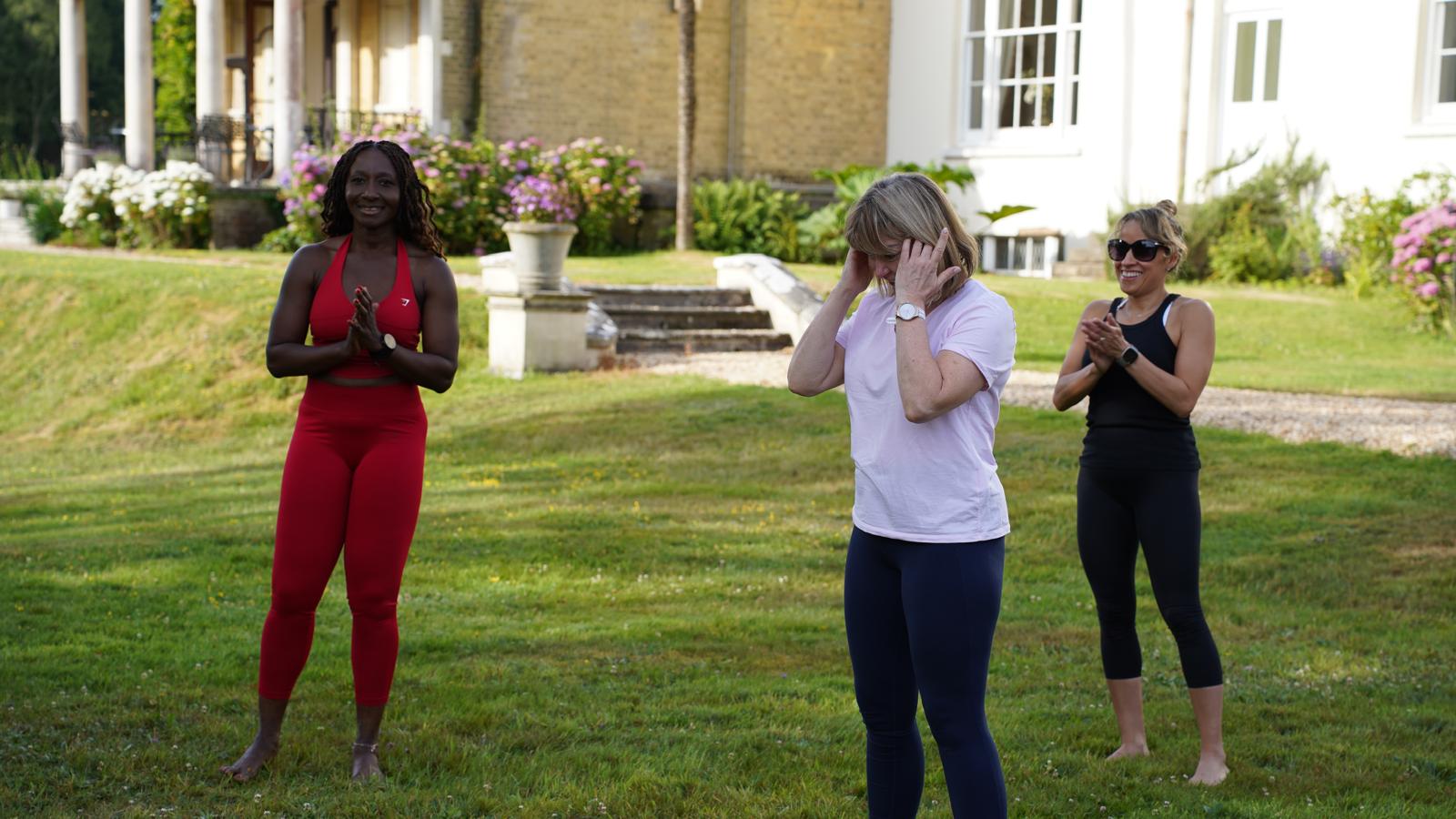 Barefoot on grass before the morning movement session, 3R Method™ Residency, Efford Park Manor
A Simple Practice
Ten to twenty minutes of bare skin contact with natural ground, grass, soil or sand, is the exposure window used in most of the published studies. A barefoot walk before breakfast, feet on the lawn while reading, or simply standing on the earth for a few unhurried minutes are all sufficient starting points. Consistency appears to matter more than duration.
 Grounded and ready, 3R Method™ Residency
For many delegates, the barefoot walk becomes the most anticipated part of the retreat morning, less a formal exercise than a shared pause before the day's structured movement begins.
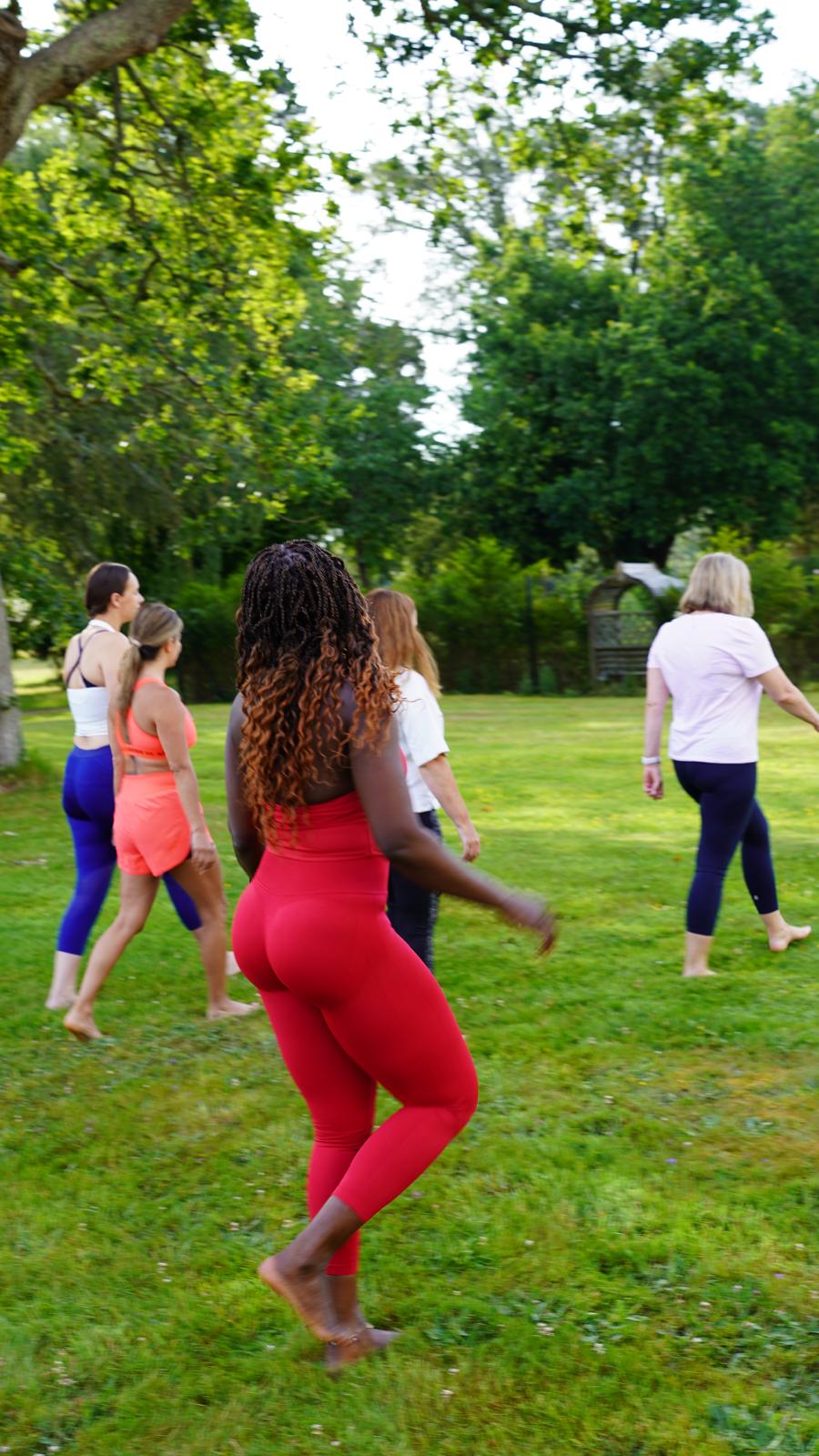 Delegates walking barefoot across the grounds, 3R Method™ Residency
References
- Park HJ, et al. A randomised, double-blind, placebo-controlled study on the improvement of sleep quality with Earthing mat. Adv Integr Med. 2025;12(3):100458.
- Ghaly M, Teplitz D. The biologic effects of grounding the human body during sleep... J Altern Complement Med. 2004;10(5):767-776.
- Chevalier G, et al. Earthing: health implications of reconnecting the human body to the Earth's surface electrons. J Environ Public Health. 2012;2012:291541.
- Chevalier G, et al. Earthing (grounding) the human body reduces blood viscosity... J Altern Complement Med. 2013;19(2):102-110.
- Sokal K, Sokal P. Earthing the human body influences physiologic processes. J Altern Complement Med. 2011;17(4):301-308.
- Chevalier G, et al. The effects of grounding (earthing) on bodyworkers' pain and overall quality of life: A randomised controlled trial. Explore (NY). 2019;15(3):181-190.
- Brown D, et al. Pilot study on the effect of grounding on delayed-onset muscle soreness. J Altern Complement Med. 2010;16(3):265-273.
- Chevalier G, et al. Grounding after moderate eccentric contractions reduces muscle damage. Open Access J Sports Med. 2015;6:305-317.
- Menigoz W, et al. Integrative and lifestyle medicine strategies should include Earthing (grounding): Review of research evidence and clinical observations. Explore (NY). 2020;16(3):152-160.
- Oschman JL, et al. The effects of grounding (earthing) on inflammation, the immune response, wound healing, and prevention and treatment of chronic inflammatory and autoimmune diseases. J Inflamm Res. 2015;8:83-96.